The December Overclock: What Black Friday Really Does to a Label That Calls Itself Sustainable
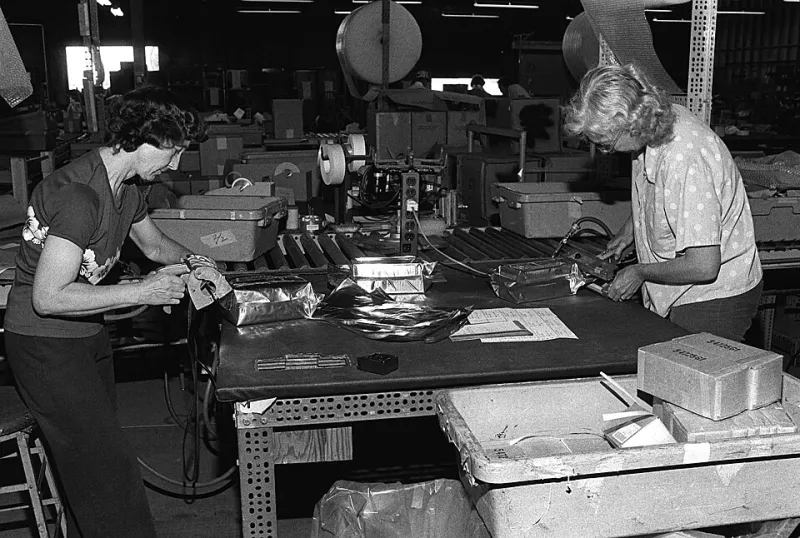
Photo: Department of Defense. American Forces Information Service. Defense Visual Information Center. 1994, Public domain, via Wikimedia Commons
Every sustainability page on every UK streetwear site reads like it was written in spring. Fair weather, calm schedules, a factory floor where everything is photographed in good light. Nobody posts the November version.
But November is when the money is made. And for small labels, the four or five weeks from Black Friday through to the January sales can decide whether the year closes in the black — which means the quarter with the least slack is also the quarter carrying the most weight. That's the overclock. Here's what it does to a supply chain that's already promised you it's careful.
The calendar nobody prints on the hangtag
It starts earlier than you think. Ranges are locked in spring, production slots booked months out, fabric ordered against forecasts made from last year's numbers and a certain amount of hope. Black Friday in the UK now effectively begins somewhere in mid-October and merges into Christmas, then Boxing Day, then a January sale that runs until the new drops land.
Each of those moments is a chance to sell out of a size run. Each sell-out creates a question the brand didn't plan for: do we restock, and how fast?
Pressure point one: the factory floor
Restocking is not a case of ordering more. Lead times on cut-and-sew are measured in weeks, sometimes months, and factories are booked. So a small label chasing 400 extra hoodies in the second week of a sale has three routes: pay for overtime, pay for faster freight, or quietly shift some of the work somewhere less scrutinised.
That third route is the classic failure mode, and it's the one audits are worst at catching. Most social audits are scheduled and annual. An undeclared subcontractor doing a rush run in December sits in exactly the gap between two scheduled inspections. It's not hypothetical — it's the single most common way a careful brand becomes an accidental one.
There's a quieter cost too. Sampling gets skipped, QC gets abbreviated, the fit that got reviewed in March goes out the door in a slightly different shape because nobody had time to check.
Pressure point two: the air freight
Fabric choices get all the glory — the organic cotton, the recycled nylon, the lovely stuff on the About page. Then a restock misses a boat and 60kg of product flies to Heathrow instead.
Air freight is roughly forty times more carbon-intensive per tonne-kilometre than sea freight. One panicked flight can quietly undo a year of careful material decisions, and it will never appear on a hangtag or a product page. To be fair to small labels: for tiny volumes, air is sometimes the only realistic option, and a brand claiming it never flies anything is either enormous or fibbing. The honest position is 'we fly rarely, here's when, here's why'.
Pressure point three: the courier van
Late November is when delivery networks hit capacity, next-day promises start slipping, and the returns rate does what it always does — UK fashion returns run high, and sale purchases return even higher, because people buy three sizes to decide at home. Every one of those journeys has emissions attached, and every returned garment has a handling cost. Free returns aren't free. They're just paid by someone else.
So can a brand be careful eleven months a year and discount in the twelfth?
Honestly? Yes — but only if the discount is an exception rather than the model. There's a real difference between:
- End-of-line and overstock, priced down because the season's done and the stock costs money to store.
- Samples, seconds and archive, sold off because they can't be sold full price.
- A permanent 'sale', where the RRP was never really the price and the discount is the actual business model.
The third one is where the ethics get thin. If you're knocking 40% off in November, something pays for it — fabric spec, factory margin, freight choice, or the people who bought it at full price in September. Under UK pricing rules, 'was' prices need to reflect a genuinely offered price, and the CMA has form on reference pricing. A brand that knows this either prices honestly or gets careful with its strikethroughs.
The test I'd apply: is the sale price the exception, or is it the real price with a full-price theatre run in front of it?
Shopping the peak without abandoning your standards
None of this means you can't buy anything. It means shopping the sale the way you'd shop a drop — deliberately.
Write the list before the sale starts. Anything not on the list isn't a deal, it's a discount. Slightly different thing.
Check the 'was' price. Screenshot the product page in October. It takes ten seconds and it's the single best defence against fake markdowns.
Ask about restocks. A brand that says 'no restock, this is the last run' is telling you the truth about their production schedule. Take the win.
Take the slow option at checkout. Standard delivery, consolidated parcels, click and collect where it exists. It's not martyrdom, it's just not asking a courier to sprint for you.
Buy fewer, better, earlier. If you know you want the jacket, buy it in October at full price from a label you rate. That's not a flex, it's just cheaper for everyone than three returns in December.
Don't DM a small brand asking them to rush a custom order in mid-December. You are effectively asking for a plane.
Buy the non-garment gifts. Repair kits, care kits, vouchers, a decent wash bag. Peak season doesn't have to mean peak volume.
The audit you can run yourself
In January, message a brand you bought from and ask what their November looked like. How they handled sell-outs, whether they flew stock in, which factory made the restock.
The brands with answers are the ones worth coming back to. The silence is the most honest sustainability report you'll read all year.